Entry #8: Stricter Building Codes?
In February of this year, I took a trip up north to Sedona. One thing that pops out about this city is its architecture, which is required to follow a strict code in order to preserve the aesthetic of the surrounding landscape.
The Land Development Code, or LDC for short, "plays an important role in preserving Sedona's scenic beauty" (Land Development Code: Scenic Beauty). It details many restrictions for its buildings, ranging from what colors they can be, how tall they can be, and the shapes they must be in order to fit the natural beauty of the area. For example, here's a picture displayed on the website with details about the LDC.
(Source)
The best part is, no one is immune to this code. Even McDonald's has to follow it. They were required to change the yellow parts of the building to blue, creating the only McDonald's with a blue Arch.
 (Source)
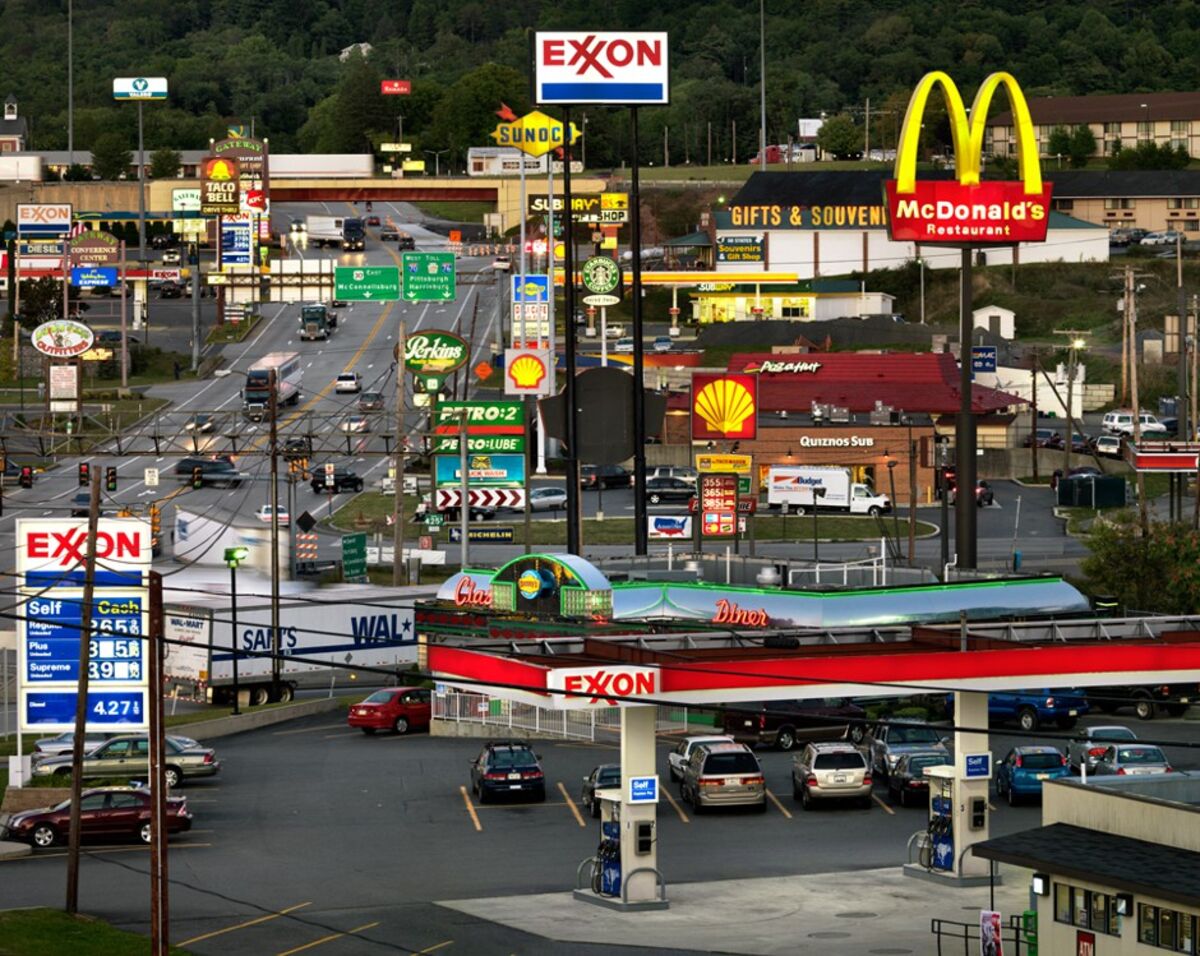
Personally, I really like this, and wish more cities were required to follow similar building codes. Many of America's cities look exactly the same due to the lack of care for the surroundings or for any idea of originality.
 (Source)
Take a look at this city. Where do you think this photo was taken? It's not possible to tell at just a glance. That's because many, MANY cities in America look like this. And I hate it. I love traveling, in concept, but going and seeing the same cities does get a bit tiresome honestly.
That's why I wish more cities were uniquely strict in their building codes like Sedona is. What if a forest town in Washington had to adhere to the environment? What if a beach town in California didn't have huge condos the moment you get off the beach? It would be a nice, unique experience that doesn't have to be followed everywhere, but followed in some places in such a way that made them unique.

I can see your point here, but I think that such strict codes would just enforce the "everything looking the same" issue and add on a bunch of bureaucratic inflexibility. At least with the present system, theoretically an architect could make something interesting that defines a local area. If a Sedonan system became common, it could just fall into being a bigger version of a stereotypical HOA, where a bunch of petty bureaucrats arbitrarily enforce vague rules on everyone else.
ReplyDelete